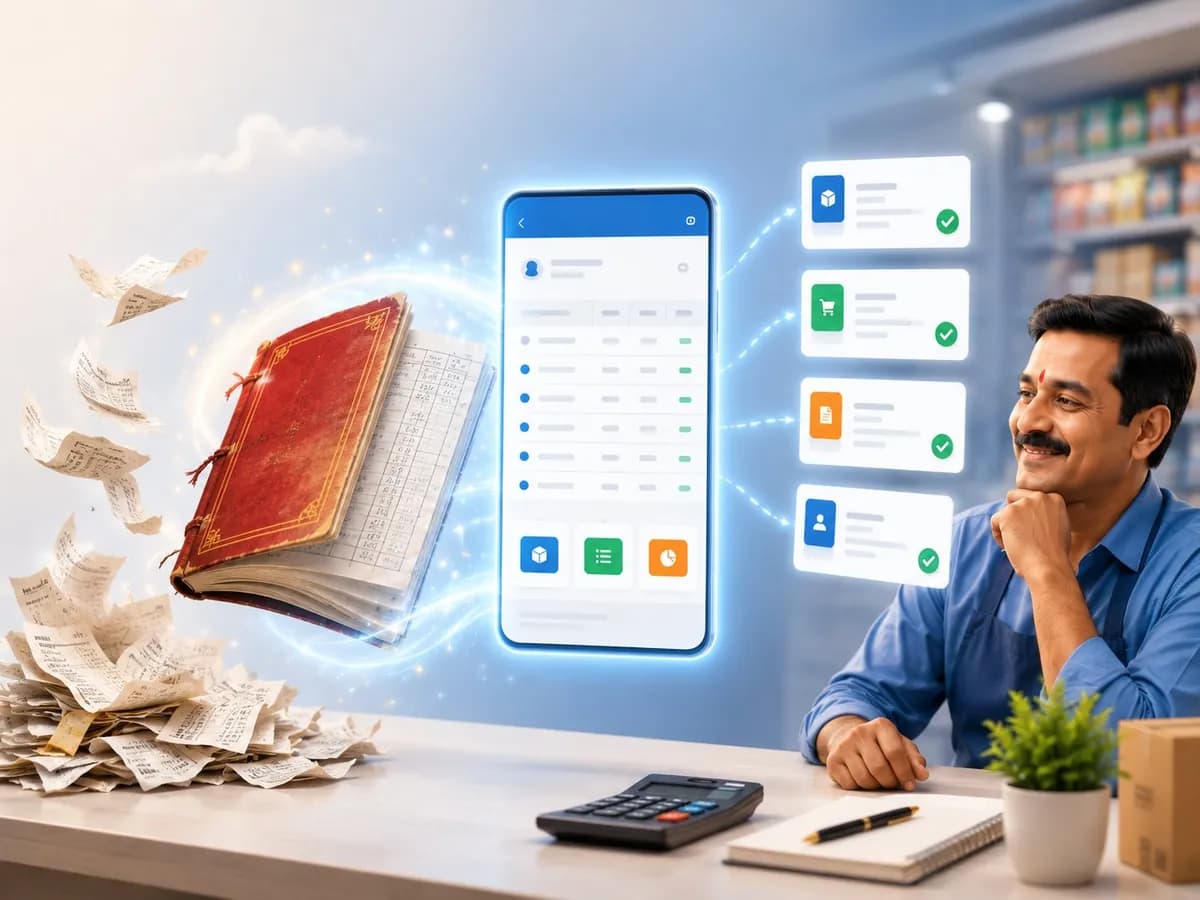
Bookkeeping vs accounting, the difference that matters. Bookkeeping is the day-to-day recording of transactions. Accounting is the interpretation: the analysis, the year-end statements, the tax planning. Bookkeeping comes first; without clean books, accounting is guesswork, which is why online accounting software and a bookkeeping tool are usually the same purchase. For most Indian small business owners the gap is not accounting skill; it is that nobody is doing the bookkeeping consistently. According to the Ministry of MSME's Annual Report 2023–24, the vast majority of India's 63.4 million MSMEs operate without a formal bookkeeping system, which is why GST filing and year-end accounts so often turn into reconstruction exercises.
GST built into your books. In India, bookkeeping cannot be separated from GST. Every sale carries a GST rate (0%, 5%, 18% or 40%) and splits into CGST, SGST or IGST depending on whether the sale is local or interstate. Every purchase from a registered supplier carries Input Tax Credit (ITC) that must be captured to reduce your tax. Rule 56 of the CGST Rules, 2017 requires a registered person to keep accounts of inward and outward supply, stock and input tax credit. Accounting software that records the HSN code and tax at the point of billing keeps your GSTR-1 and GSTR-3B data ready by default, with no parallel GST register needed.
What clean bookkeeping software must do. An accounting package for an Indian SMB should maintain a day book, a cash book and an account book, capture expenses by category, handle GST automatically, and give a real-time profit and loss view. Party-wise tracking is what party ledger software adds on top, so a customer's running balance is never a separate spreadsheet. It should run on an Android phone, store data on secure cloud servers with encryption, and let your CA log in remotely. Section 44AA of the Income Tax Act, 1961 makes maintaining books of account a legal obligation once your income or turnover crosses the prescribed limits, so this is compliance, not just good housekeeping.
Who uses it. Kirana and grocery stores, medical and hardware shops, electronics and garment retailers, wholesalers, small manufacturers and service businesses: anyone where money moves daily and the owner, not a full-time accountant, keeps the books. If you are doing this for the first time, bookkeeping basics without a CA covers the ground rules before any software is involved.